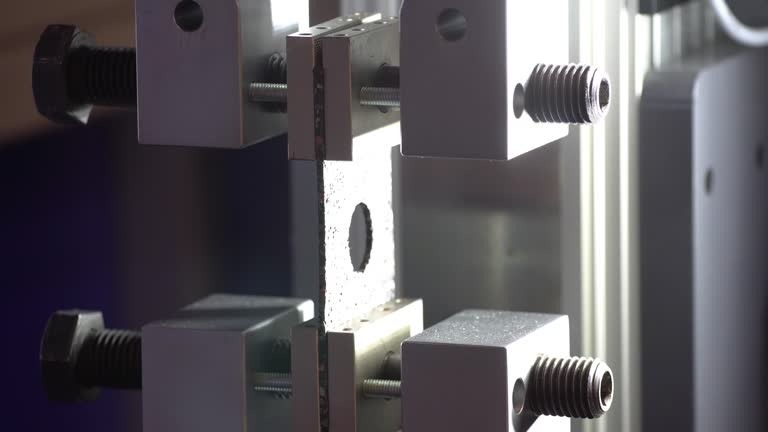

Coordinate Measuring Machines (CMMs) have become an indispensable tool in modern industries, driving precision and quality in manufacturing processes. These innovative devices enable accurate measurement of physical geometrical characteristics of an object, ensuring that products meet stringent specifications and industry standards. As industrial demands evolve, so do the capabilities of CMM technology, incorporating advanced features that enhance performance, efficiency, and adaptability.
Traditional CMMs primarily relied on tactile probing systems to capture data points on a part’s surface. However, recent advancements have introduced non-contact measurement techniques such as laser scanning and optical sensors. These enhancements allow CMMs to handle delicate or complex surfaces without causing damage, making them ideal for industries like aerospace, automotive, and electronics where precision and surface integrity are critical.
One of the key innovations in modern CMMs is the integration of automation and robotics. Automated CMMs can operate continuously with minimal human intervention, significantly increasing throughput and reducing the potential for human visit our website error. Robotic arms equipped with CMM probes can navigate complex geometries and reach difficult areas, delivering consistent and repeatable measurements. This automation is particularly beneficial in high-volume production environments where speed and accuracy are paramount.
Moreover, the incorporation of sophisticated software algorithms and artificial intelligence (AI) has revolutionized data analysis in CMM systems. AI-powered software can quickly interpret measurement data, detect anomalies, and provide actionable insights for quality control teams. This capability helps industries identify defects early in the production cycle, reducing waste and lowering manufacturing costs. Additionally, cloud-based platforms allow real-time data sharing across multiple facilities, facilitating better collaboration and decision-making.
Portability is another area where CMM technology has seen significant innovation. Portable and handheld CMM devices enable on-site inspections and measurements, eliminating the need to transport parts to a dedicated metrology lab. This flexibility is invaluable for large-scale components, maintenance checks, and fieldwork in sectors such as construction, heavy machinery, and energy.
In conclusion, innovative Coordinate Measuring Machines are transforming modern industries by providing unparalleled measurement accuracy, enhanced automation, and intelligent data processing. These advancements empower manufacturers to achieve higher quality standards, optimize production workflows, and remain competitive in a rapidly changing market. As technology continues to advance, CMMs will undoubtedly play an even more critical role in shaping the future of precision manufacturing.